

What makes a beach beautiful? A typical beach consists of a sandy shore where kids play and adults sunbathe. The beach has a waterway where animals go about their daily activities and people swim. Some beach-goers choose to dive under the water in search of these animals, others aim to stay above the water, hoping to avoid any brushes with slimy creatures. Those are the usual makeups of a standard beach. But again, what makes a beach beautiful, aside from the normal contents?
1. Little Corn Island, Nicaragua

Fifty miles off Nicaragua’s coast is Little Corn Island, one of Nicaragua’s lesser known, in fact, one of the world’s lesser-known beaches. Little Corn Island and its sister, Big Corn Island, both swish around in the Caribbean Sea, but Little Corn attracts a heavier touristy audience. The color of the water parallels gemstones, offering a bright blue cobalt sea to swim in and snorkel under.
Like many islands, a swarm of palm trees freckles the shore, but Little Corn stands out with its ample selection of Palm Tree swings. Sit on one of the tree swings and sip a fresh juice, looking out at the lapping water. Dig your feet into the golden sand of Little Corn Island and admire the charm of this secret Nicaraguan wonderland.
2. Tunnels Beach, Kauai, USA
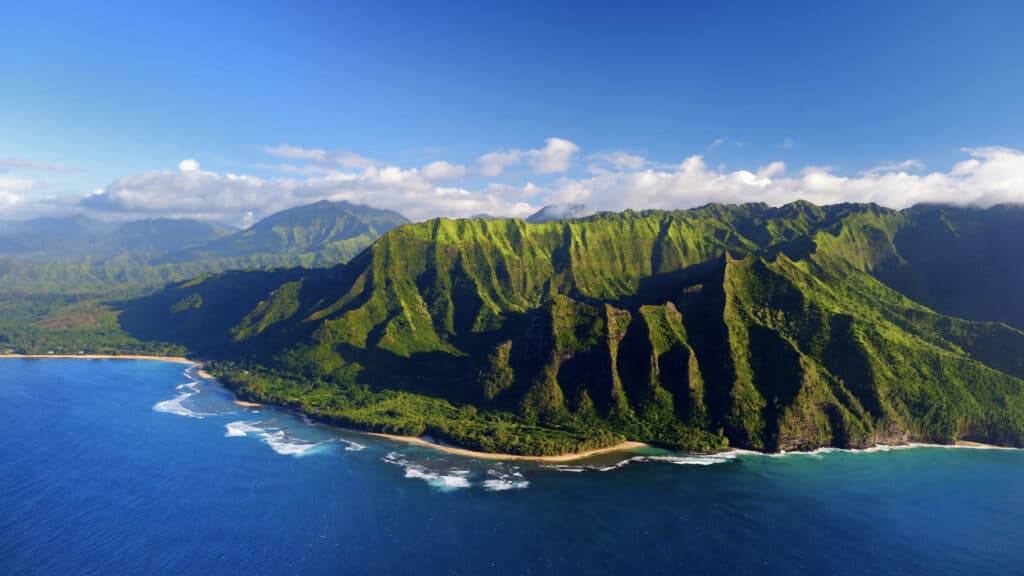
Have you ever heard of a lava tube? No? Well, Tunnels Beach, Kauai is the ideal spot for an introduction to the natural formations. Lava tubes are underground cavernous spaces etched beneath the surface of volcanoes. In Tunnels Beach, the Lava Caves create an underground city with meters upon meters of lava tubes. Dive under the water for an unmatched look into the dazzling underground carved by lava. Above shore, the ocean water emits a clear blue hue, begging swimmers, divers, or snorkelers to explore the area. Mount Makana lurks in the distance, framing the postcard destination.
3. Pink Beach, Komodo Island, Indonesia
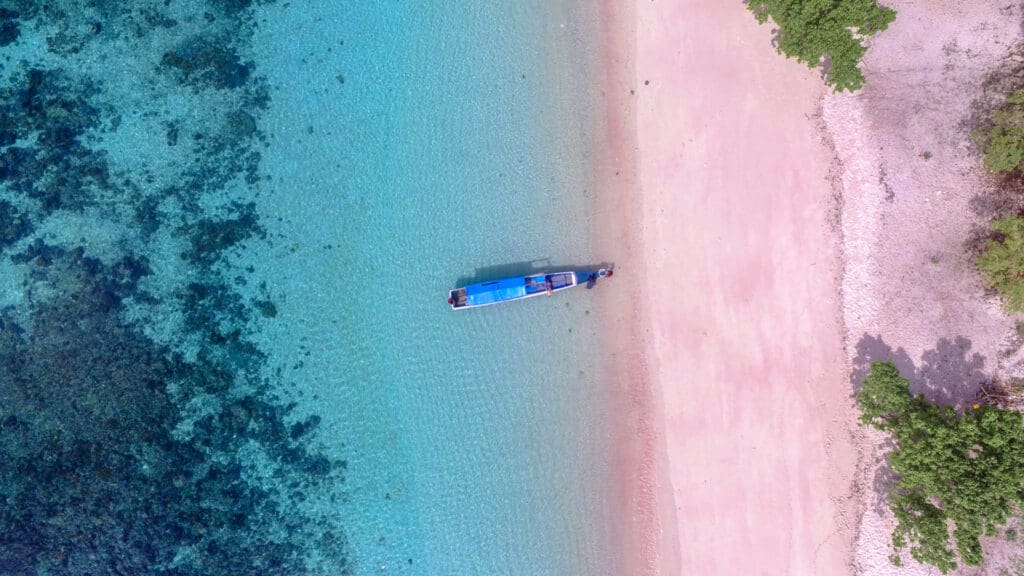
Picture a day trip to your favorite beach. You sink through white sand, trailing toward the cerulean sea, excited to swim among the fish and marine life. Families camp out on the beach, enjoying basking in the sun or building sandcastles with the famous golden sand. Switch that yellow sand out for pink granules, and you get the Pink Beach on Komodo Island.
Pink Beach’s pink sand derives from an organism, Foraminifera, present in the coral reefs. Standard-colored sand meets the Foraminifera, mixing into the gorgeous pink color. Zooming out from the pink sand beach reveals a triad emulating beach-themed Neapolitan ice cream. Green grass leads the way to the pink sand that soon crashes into the bright, blue water.
4. Coral Bay, Australia

Coral Bay is a bucket-list destination if you want to swim with whale sharks in their natural habitats. The beach offers all the standard facets of a beach, like white sand, blue water, and a premiere spot to get a tan, though the main pull to this beach points to Ningaloo Reef.
Ningaloo Reef, the largest fringe reef (a reef sprouting up near the shore) in the world, houses species like whale sharks, humpback whales, manta rays, and turtles. Visitors searching for an airy experience enjoy fishing the area, catching species ranging from mahi-mahi to marlin.
5. Shell Beach, Australia
Wave goodbye to golden sand. Pink sand is out. Shell Beach Australia has the next best thing: shell sand. Shell Beach, Australia, lives up to its name. Fragments of shells from the Fragum cockle comprise the beach’s shore. Remember to wear a pair of shoes before dawdling along the sharp shore.
Shell Beach stands out for two reasons. One is the shelly shore. The other notable asset of the beach is the salty quality of the water. Shell Beach’s limited water flow and filtration elevates the salt levels, dialing up the salty scale from ocean levels to twice that of the ocean. The high salinity levels dictate the kind of wildlife inhabiting the area. Fragum cockle thrive in the salty seas, as do sea urchins, hermit crabs, cuttlefish, and Nemo’s own anemone fish.
6. Flamenco Beach, Puerto Rico
Street artists practice their work on deserted World War II tanks parked on Flamenco Beach. “The Tank” calls to the pre-World War II era when the U.S. occupied Culebra, using the Archipelago as battle preparation. Transparent water kisses the white sand shore of the horseshoe-shaped beach. Flamenco Beach tourists adore snorkeling the premises because of the translucent water and the heavy population of turtles. Other animal species that could appear underwater during a snorkeling session include parrot fish, wrasse, and ghost crabs. Snorkelers may see iguanas or hermit crabs on the shore when they come up for air.
7. Koh Lipe, Thailand
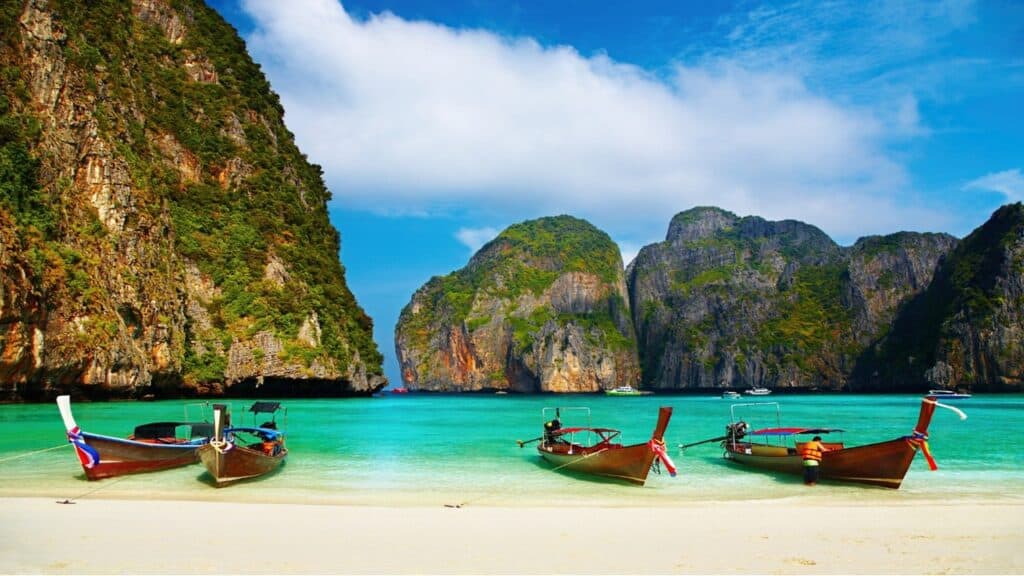
Scuba divers and snorkelers find heaven underwater in Koh Lipe. A rainbow of coral hypnotizes snorkelers and divers with popping pinks, lilac purples, emerald greens, and fiery red coral installments. Divers and snorkelers share the water with barracudas, whales, dolphins, starfish, manta rays, sharks, eels, and seahorses.
Koh Lipe belongs to the Tarutao National Marine Park, meaning the organization strives to protect the natural life teeming under the water and on the shore. Paddleboard atop the crystalline water, choosing to look out at the mossy mountains fringing the horizon or the proud palm trees in the golden sand.
8. Balos Beach, Crete

Prominent sand paths forge a pathway between Cape Tigani and Cape Gramvousa. Warm, turquoise water flows on either side of the channel, serving as a family-friendly swimming spot for tourists. Balos’ water is warm and shallow, appealing to families and people hoping for a beach trip where they needn’t submerge in the water to enjoy the beach. Nonetheless, Balos isn’t limited to the sand and water. An islet surrounding the beach, Imeri Gramvoussa, boasts the Gramvousa Castle, a relic that doubled as a Venetian hideout during the 16th century.
9. Cathedral Cove, New Zealand
To arrive in Cathedral Cove, you must take an hour and a half hike to the entrance: a pointed archway revealing Te Hoho, a pumice rock nature modeled after a ship’s prow. Monterey Cypress trees sprout out of a towering cliff beside Te Hoho. Sugar sand cradles the rocks, catching the sunlight on their facets.
After the excitement of spotting Te Hoho wears down, throw on a snorkeling mask and plunge into the azure blue waters for a chance to see starfish, stingrays, crayfish, angelfish, or snappers. Dolphins and seals have been spotted around Cathedral Cove, too.
10. Pfeiffer Beach, California, USA

We’ve tackled white sand beaches, pink sand beaches, and beaches made of microscopic shell fragments. Pfeiffer Beach is a beach parading its purple sand. Quartz and garnet are the main contributors to the lavender sand. The focal rock formation, Keyhole Arch, is a granite monolith with a doorway cut out in the middle. Sunlight travels through Keyhole Arch, illuminating Pfeiffer Beach and its eccentric purple sand.
Pfeiffer Beach’s geography places the beach on the Pacific Ocean, translating to frigid waters most of the year. So, visitors (most visitors) decline to swim or participate in other underwater activities, opting to stay on the sand, appreciating the beach’s appearance. Photographers, writers, musicians, and artists visit the beach for inspiration.
11. Cannon Beach, Oregon, USA
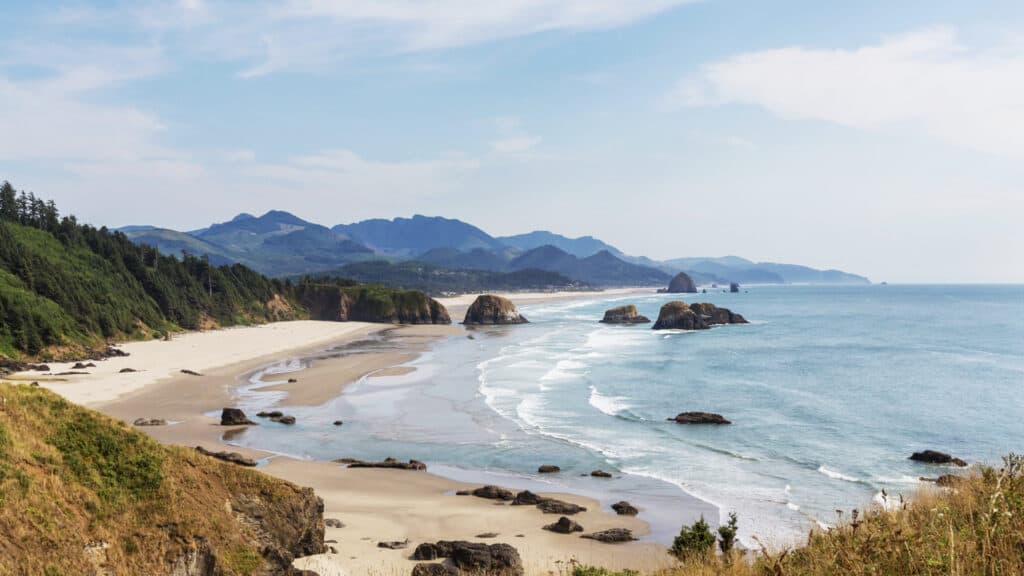
The Haystack Rock stretches 235 feet into the air on Oregon’s Cannon Beach. Smaller basaltic rocks materialize on both sides of the prospect, along with tufted puffins who refer to the rock as their spring home base. The lighting of the area determines the mood of the beach. A dark, hazy winter day creates a dismal, gray backdrop perfect for a horror movie shoot or a winter walk. Days filled with sunshine light up the beach, producing a blue-skied utopia useful in wedding photoshoots or for a summer beach day. When the sun sets, the ball of gas melts into the sky, painting an idyllic orange horizon behind the large rock.
12. Reynisfjara Beach, Iceland
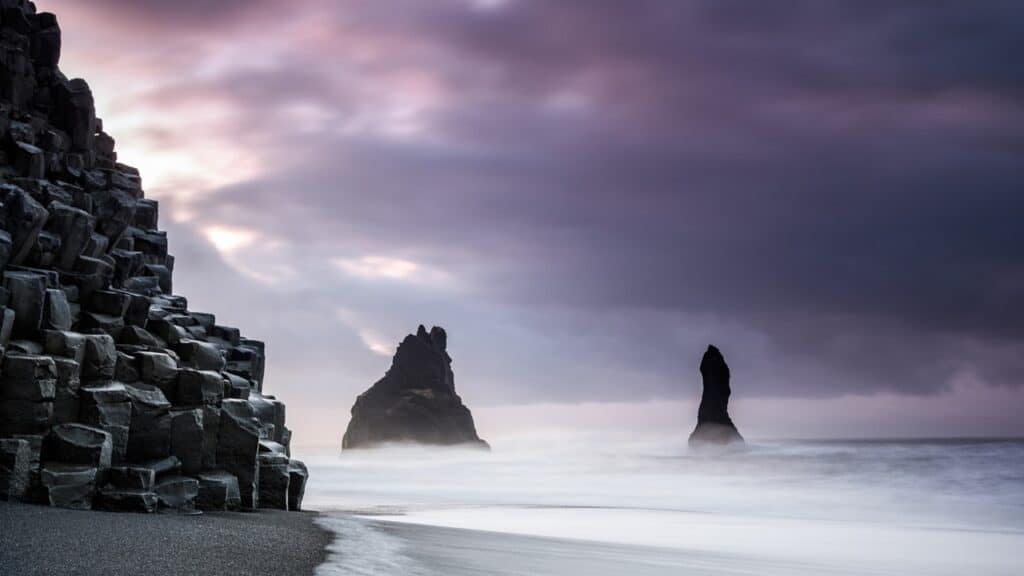
Reynisfjara Beach settles itself on Iceland’s Southern coast, near the town of Vik. Do not swim in this water. The beach’s black sand carries a black tint thanks to its volcanic composition. The lava that erupted from Mount Katla meshed with the ocean water, converting into tiny black sand granules.
Violent Atlantic Ocean waves smash into the rock pillars standing hundreds of feet from the shore. The three main rocks, Reynisdrangar, share a history as a part of the ancient Reynisdrangar cliffs. Centuries of lava flow and erosion transformed the cliffs into basalt rocks. According to locals, the rocks represent trolls that shifted into stone. Puffins treasure the Reynisdrangar, taking frequent trips to the rocks each summer and fall.
13. Horseshoe Bay Beach, Bermuda

Horseshoe Bay earns its name from its U-shape. The island’s curvature protects native inhabitants from predators not used to the beach’s shape. An amalgam of trees lines the perimeter of Horseshoe Bay, shaping a cozy cove for beach-goers interested in walking and sunbathing on the pink-sand beach. Aquamarine Atlantic Ocean water drifts onto the sand, contrasting with Reynisfjara Beach’s brutal Atlantic waters. Limestone cliffs encase the seas of the pink-sand beach. Underneath the water, divers and snorkelers gape at shipwrecks coexisting with gleaming strands of coral.
14. Sandwich Harbour, Namibia
Instead of sandy shores, Sandwich Harbor introduces dune shores. Immense sand dunes collide with the navy blue Atlantic waters around the Namib Desert. The lagoon elicits a striking contrast between its cobalt blue waters with the sand dune’s deep, bronzed colorations. Sandwich Harbour entices adventure enthusiasts with its main attraction: dune bashing. Dune bashing takes a 4×4 vehicle over, under, and through the sand dunes, gifting passengers with an unmatched view of the beach via a blood-pumping activity. Travelers who prefer a tamer activity sit on the sand dunes and gaze out toward the lagoon. Native animals like dolphins, seals, flamingos, and pelicans occupy the harbour.
