

Utah has an undeniable beauty that has attracted millions of hikers, travelers, and photographers for hundreds of years. Anyone who has visited the Beehive State knows that the state is in a class of its own. The terrain goes from desert marked with red sandstone arches to huge, snow-covered ski mountains, white salt flats, and deep canyons.
It is impossible to see everything the state has to offer in one trip, but some places stand out, such as the Mighty 5 National Parks in the southern part of Utah. The Utah Mighty Five comprises Bryce Canyon, Zion Canyon, Canyonlands, Capitol Reef, and Arches National Park. Known for their desert solitude, spectacular red-rock formations, and over 1,000 miles of hiking and trekking trails, the Mighty Five are worth the hype. It is rare to find a place that is left so untouched by humans.
Planning a trip to Utah’s Mighty Five? You would have many questions in your mind: What is the best Utah national park? Are all these Utah national parks worth visiting? How to get there by road? What are must-see highlights in these parks? And so on. This guide to the 5 National Parks in Utah will cover all your queries and help you plan the best Utah Mighty Five itinerary.
Without further ado, here we go!
How to Start Your Trip to Utah’s National Parks

If you're flying to Utah, you'll arrive in either Salt Lake City or Las Vegas, Nevada. The best route to the Utah National Parks from Salt Lake International Airport is Salt Lake to Arches National Park/Canyonlands National Park (4 hours), Arches to Capitol Reef National Park (2.5 hours), Capitol Reef to Bryce Canyon National Park (3 hours), Bryce Canyon to Zion National Park (1.5 hours), and Zion to Salt Lake (4.5 hours).
How Many Days You Need to See Utah’s Mighty 5?
We recommend at least seven days to complete a whirlwind tour of Utah's Mighty 5—Arches, Canyonlands, Capitol Reef, Bryce Canyon, and Zion. Start this 7-day itinerary by driving from Salt Lake City to Arches National Park, with Zion National Park being the last stop. It is best to travel from point to point and stay overnight inside the park or in the closest towns instead of returning to the starting point. With seven days, you have enough time to explore each park and extra travel time at the beginning and end of each trip.
The 5 Incomparable National Parks in Utah
1. Arches National Park
When it comes to deciding the best national park in Utah, Arches National Park ranks at the top of the list. The park is a red-rock wonderland of unusual rock formations, sandy backcountry trails, petrified dunes, not to mention sandstone arches. Over 300 million years of erosion have shaped the sandstone into giant arches, including the Double Arch, Delicate Arch, Landscape Arch, and more.
Not only will you find more than 2,000 arches here, but also harrowing hoodoos, massive mesas, sundry sandstone rocks, and other amazing geological features, like Balanced Rock.
Best Things to Do in Arches National Park
Lucky for you, Arches offers a ton of amazing things to do. Here are some can't-miss activities:
- Take the scenic drive route
- Hike the Devils Garden Trail
- Take a sunset hike to Delicate Arch
- Photograph Balanced Rock (both sunrise and sunset)
- Visit North and South Windows and Turret Arches
- Go to Double Arch, the tallest arch in the Park
- Hike Park Avenue
- Enjoy a panoramic view from the Garden of Eden
- Visit Sand Dune Arch
- Take a ranger-guided tour of the Fiery Furnace
Things You Need to Know About Arches National Park
Entrance Cost: $30 per vehicle (Valid for 7 days) or American National Park Pass
Timed Entry Permit: If you plan to visit Arches National Park, you need a timed entry permit. As of April 1, 2022, it is mandatory for visitors to have a timed entry permit reservation from April 1 to October 31. You can book these tickets three months in advance. For example, April tickets are available for reservations on January 1. Visitors with a timed entry permit can enter the park between 6 am and 6 pm.
How to Get There: Arches National Park is just a 10-minute drive from downtown Moab and 30 minutes northeast of Canyonlands Island in the Sky. Inside the park, there is no shuttle bus, so you can get around in your car or rent a bike. Biking is a popular and easy way to explore the park, as most of the areas are relatively flat.
Where to Eat: Start your day with breakfast burritos at Sweet Cravings. There are not any restaurants in Arches, so buy some food at the City Market grocery store for your Arches trip. After a day of adventures in the park, eat your dinner in Moab. Fill up on Italian food from Pasta Jay's or pizza from Antica Forma.
Where to Stay: Moab is the best place to stay during your visit. We recommend Scenic View Inn (a budget-friendly hotel in a Moab neighborhood), Hoodoo Moab ( a beautiful, luxury hotel in the heart of Moab), and Red Cliffs Lodge (a highly-rated hotel next to the Colorado River).
Campgrounds such as Willow Springs Road, Sand Flats Recreation Area, and Devils Garden Campground (inside the Arches) are also good options for staying.
How Many Days Do You Need in Arches National Park?
One day is enough to see all the highlights of Arches National Park. Start early, before 8 am, and pack a picnic lunch so you can spend the entire day in the park.
Check out the best-guided tours to Arches National Park.
2. Canyonlands National Park
With more than 330,000 acres, Canyonlands National Park is one of the largest parks in the US and the largest in Utah. Compared to its popular neighbor, Arches, Canyonlands offers a different experience. The park's desert landscape is full of arches, mesas, buttes, canyons, dirt roads, hiking trails, and Native American rock paintings. However, the Colorado River and Green River cut through the park's dry landscape and provide whitewater rapids for rafters and kayakers.
Canyonlands is divided into three districts—Island in the Sky, The Needles, and The Maze.
Island in the Sky is the most visited part of the park and is the closest district to Moab. The popular attractions of this section are Grand View Point, Mesa Arch, and different short and long hikes.
The Needles, located south of Moab, is a more rugged district where sandstone pinnacles create unique landscapes. It is about 40 minutes off the main road and is accessible by 4×4 vehicles and on foot.
The Maze is the most remote district of Canyonlands National Park, or, I would say, one of the most remote places in the US. There are no paved roads leading to or within the Maze, and it is only accessible by 4×4.
If you have just one day to explore Canyonlands National Park, spend it on Island in the Sky. However, if you've more time, the Needles is worth visiting.
Best Things to Do in Canyonlands National Park
- Watch the sunrise at Mesa Arch
- Hike in Canyonlands—Aztec Butte, White Rim Trail, The Gooseberry Trail
- Visit the overlooks in Canyonlands—Grand View Point, Shafer Canyon Viewpoint, and Buck Canyon Overlook
- Hike around Upheaval Dome
- Explore the Needles
- Enjoy whitewater rafting down the Cataract Canyon with Class V rapids
- Explore the Maze in a 4×4
- See the Rock Art at Horseshoe Canyon
Things You Should Know When Visiting Canyonlands National Park
Entrance Cost: $30 per vehicle (Valid for 7 days) or American National Park Pass
Best Time to Go: Canyonlands National Park is open year-round and 24/7. Spring and fall are the best times to visit the park.
How to Get There: The best way to get to Canyonlands is a road trip through Utah. The park is about a 4-hour drive south and east of Salt Lake City. It is located next door to Arches National Park, and Moab is the best home base to explore these parks. Island in the Sky is just a 40-minute drive from Moab.
How to Navigate the Park: The best way to get around Island in the Sky is by car. There is no shuttle service in the park. However, parking is ample. You will have to visit each district separately because no roads or bridges connect the districts within the park. The Maze is only accessible by 4×4 vehicle.
Where to Eat: Like Arches, there are no restaurants in Canyonlands. Due to its remote location, it is a good idea to pack a picnic lunch. After a long, adventurous day in Canyonlands, Moab is a great place to stay and have dinner. There are many restaurants in town, like Antica Forma, Sunset Grill, and II Posto Rosso. If you're visiting the Needles district, Monticello is the closest location with numerous restaurants.
Where to Stay: As mentioned earlier, Moab is an ideal area to stay if you visit Arches and Canyonlands. Springhill Suites is the closest accommodation option to Canyonlands. Other best options in Moab are Hyatt Place Moab, the Hampton Inn, and the Element Moab. Inside the park, you'll find many camping locations. Canyonlands is home to two popular campgrounds—Willow Flat Campground and Needles Campground—and many backcountry campsites.
How Many Days Should You Spend in Canyonlands?
If you want to visit both Island in the Sky and The Needles, two days are enough to explore all the highlights at a slow race. If you've only one day to explore Canyonlands, spend it on the Island in the Sky district, visit the overlook, and hike the trails. Then, return to Moab by Shafer Canyon Road.
Important Info: A permit is required to drive and bike the popular White Rim Trail and for overnight camping.
3. Capitol Reef National Park

Capitol Reef National Park is the second-largest national park in Utah and the least crowded of Utah's Mighty 5. Everything in Capitol Reef revolves around the Waterpocket Fold, a literal wrinkle on the earth's surface that consists of rock formations, slot canyons, and layered sandstone. This geological monocline stretches about 100 miles and is surrounded by monoliths, pillars, arches, and white sandstone domes.
Undoubtedly, the park's main attraction is the massive red rock formations stretching for miles. When you get closer, you'll realize that it is not a single stone wall but divided into different sections. Each section has its separate name, like The Ferns Nipple, The Fluted Wall, and Navajo Dome. Cathedral Valley Road and Capital George Road are other top highlights. When it comes to hiking trails, Capitol Reef competes with Zion.
One of the things that makes Capitol Reef National Park my favorite is that it is easier to get around, and you can see many attractions right from your car.
Best Things To Do in Capitol Reef National Park
- Take a scenic drive on Highway 24, the main road that runs through the park
- Drive the famous 8-mile Capitol Reef Scenic Drive
- Visit the viewpoints—Sunset Point, Goosenecks Overlook, and Panorama Point
- See the Petroglyphs (rock art paintings) created by Native Americans
- Hike the popular trails in Capitol Reef National Park, including Hickman Bridge, Chimney Rock Trail, Cassidy Arch, Grand Wash, and Cohab Canyon
- Pick fresh fruit in the Fruita Historic District, home to orchards planted by Mormon pioneers
- Eat freshly baked pies at the Gifford Homestead
Things You Should Know About Capitol Reef National Park
Entrance Cost: $20 to drive the Capitol Reef Scenic Drive. The pass is valid for 7 days.
Permits: Backcountry camping, canyoneering, and hiking require a free permit from the park's visitor center. Fruita Campground reservations are available from March 1 to October 31.
Best Time to Visit: There is really no bad season to visit Capitol Reef Park—thanks to the low humidity year-round. Spring and fall are the best seasons. Summers are hot but bearable, with highs usually in 90s. Shaded trails are available. In late-summer (July and August), thunderstorms are common and cause flash floods. These storms also create dramatic skies and great lighting for photographs.
How to Get There: Capitol Reef National Park is located in south-central Utah and can be reached via SR 24 from I-70. From the Salt Lake City International Airport, the drive takes less than 4 hours. The park is about 3.5 hours from St. George in southwestern Utah. If you're coming from Bryce Canyon, Capitol Reef is about 2.5-3 hours drive through Scenic Byway 12.
How to Get Around the Park: Within Capitol Reef National Park, Scenic Drive is the main driving route. This 8-mile road runs north to south and isn't a loop, so you'll drive back the same way. Allow approximately 1.5-hour roundtrip to explore the Scenic Drive and the two dirt roads – Grand Wash and Capitol Gorge. These dirt roads lead to slot canyons and trailheads and are safe for passenger cars and RVs.
Where to Stay: There aren't many accommodation options near the park. Torrey is the closest town to Capitol Reef and has some of the best hotels. The Capitol Reef Resort, located just west of the park, offers traditional motels and glamping tents. The Day Inn Capitol Reef in Torrey offers the best lodging at affordable rates. Fruita Campground is the only camping option in the park. Tourists who plan to hike Capitol Reef's trails can set up a camp in this wonderful campground between red rocks and orchards.
Where to Eat: There are no restaurants inside Capitol Reef National Park besides pies and cinnamon rolls at the Gifford House. Most visitors go to Torrey to eat, which is just a 10-minute drive. The Wild Rabbit and Reef Rock Cafe are good options for coffee, breakfast, or lunch. For dinner, dine at the Rim Rock Patio.
How Many Days Should You Spend in Capitol Reef National Park?
Most people decide to spend a half day or a full day in Capitol Reef National Park. During this time, you can see all the sights along Highway 24, drive Scenic Drive and Capital George Road, and visit Fruita.
Note: As of May 20, 2024, the Scenic Drive is closed from south of the Fruita Campground to Capital George. You may have to see heavy traffic. The road is expected to reopen at the end of October.
Check Out the Best Guided-Tours to Capitol Reef National Park
4. Bryce Canyon National Park
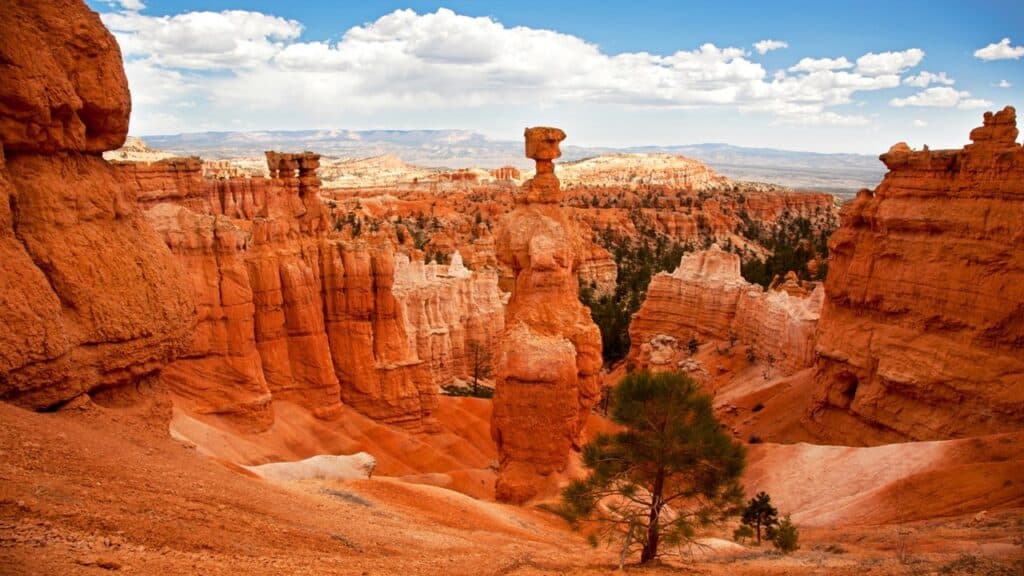
Bryce Canyon National Park is a relatively small park with a big WOW factor. The defining feature of the park is a series of natural amphitheaters sunk within pink cliffs and filled with red rock hoodoos. Hoodoos are tall thin rock spires that protrude from the canyon floor.
Geologically, hoodoos exist all over the planet, but they are found in abundance in Bryce Canyon. These rock formations glow in brilliant hues of pink, orange, and red as the sun rises and sets. Along the rim of the amphitheater, there are 13 viewpoints, including Sunrise Point, Sunset Point, and Rainbow Point.
In addition to these viewpoints, numerous hiking trails lead down into the bowl filled with hoodoos. Bryce Canyon is small and easy to get around. Enjoy the views from the rim, hike the popular trails, and fill your camera with beautiful photos.
Best Things to Do in Bryce Canyon National Park
- Watch the sunrise at Sunrise Point when the sun lights up the Bryce Canyon hoodoos and rock formations—a spectacular view for photographers
- Walk along the rim to Sunset Point
- See Thor's Hammer—the most photographed hoodoo in Bryce Canyon
- Hike the Figure 8 Loop—the Queen's Garden, Peek-a-boo Loop, and Navajo Loop Trail
- Enjoy the 19-mile Bryce Canyon Scenic Drive
- Visit Bryce Point and Inspiration Point for panoramic views of Bryce Canyon amphitheater
- Hike the Fairyland Loop Trail, an 8-mile challenging hike
Things You Should Know About Bryce Canyon National Park
Entrance Cost: $35 per vehicle. The pass is valid for 7 days.
Best Time to Go: Early winter and late spring are the best seasons to visit Bryce Canyon National Park. In late spring, the trails start to open up, and there are possibly fewer crowds. Early winter is beautiful, as Bryce's orange cliffs appear more spectacular after a fresh snowfall.
How to Get There: Bryce Canyon is located in Southwestern Utah, about 4 hours from Salt Lake City and 2 hours from St. George. The nearest national parks to Bryce Canyon are Zion National Park (1.5 hours), Capitol Reef National Park (2 hours), and the North Rim of Grand Canyon ( 3 hours). There is no public transport going to Bryce Canyon National Park. You can only get there by car. To reach Bryce Canyon from Las Vegas, take the most scenic route through Zion via I-15 north to Utah State Route 9. If you want to avoid the busy Zion roads, take I-15 north to South Route 20. I-15 is also the main route from Salt Lake City, which is about 270 miles north of Bryce.
How to Get Around in the Park: Within Bryce Canyon National Park, there is a free shuttle service that takes visitors to the park's most popular trails and viewpoints. Using the shuttle is not mandatory but a wise choice during the peak season. The park is open year-round. However, during and after the winter storms, some roads may be temporarily blocked.
Where to Stay: There is only one accommodation option inside the park—Bryce Canyon Lodge. If you're looking for more options, Bryce and Tropic are the closest towns outside the park. Bryce is the closest to the park entrance, and you can choose from several hotels. Best Western Plus Canyon Grand and Best Western Plus Ruby's Inn are by far the best places to stay.
Camping in Bryce Canyon: If you want to camp, there are two campgrounds inside the park. Sunset Campground is larger, and you have to make reservations in advance. North Campground is right on the rim of the amphitheater and a short walk to the best hikes in the park.
Where to Eat: Bryce Canyon and the surrounding areas have MEDIOCRE food for dining. There are some dining options inside the park: The Lodge at Bryce Canyon, Valhalla Pizzeria and Coffee Shop, and Bryce Canyon General Store. Outside the park, the Cowboy's Buffet & Steak Room and Grand Canyon Diner inside Ruby's Inn are the best bets.
How Many Days Should You Spend in Bryce Canyon National Park?
Bryce Canyon NP is a small, compact park. One day is enough to see the park's highlights.
Check Out the Best Guided Tours to Bryce Canyon National Park
5. Zion National Park

Wrap up your Utah Mighty 5 trip on a high note! Zion is Utah's first national park and one of the most popular in the US. Originally inhabited by the Virgin Anasazi and later used by Spanish hunters, Zion has been a gem of the national park system since 1919. In 2023, it ranked the third most visited park in the US with over 4 million visitors.
The main attraction of Zion is the 1000-foot-deep canyons along the Virgin River. Zion is also one of the best hiking spots in the US. Angels Landing and the Narrows are two popular hikes that are almost on the bucket list of every traveler. Moreover, there are short, family-friendly hikes and multi-day backpacking adventures.
Best Things to Do in Zion National Park
- Hike Angels Landing – a 5.4-mile long trail with a steady climb of over 1,500 feet
- Hike up the Virgin River—The Narrows—a strenuous 9.4-mile hike
- Hike to the Observation Point for the best views of Zion
- Drive the Zion – Mount Carmel Highway that connects the visitor center to the park's east entrance
- Watch the sunset from Canyon Junction Bridge
- Experience canyoneering through narrow canyons—The Subway and Orderville Canyon are the two most popular routes
Things You Should Know About Zion National Park
Entrance Fee: $35 per vehicle, valid for 7 days. If you're coming with RVs and trailers higher than the specified size, you'll have to pay a $15 fee to pass through the Zion – Mount Carmel tunnel.
Permits: As of 2024, visitors need an advance reservation and permit to hike to Angels Landing.
How to Get to Zion: Zion National Park is about 4.5 hours from Salt Lake City and 3 hours from Las Vegas. Most Zion visitors stay in Springdale, the closest town to the park, just 5 minutes from the entrance. Walk for about 30 meters from the entrance to get inside, where the free Zion Canyon Shuttle Service will take you around the park.
How to Get Around in the Park: For most of the year (from March through November), private cars are not allowed to drive on Zion Scenic Drive. The shuttle service is operational and is the only way to get around the park. Mid-morning lines are usually frustratingly long, so make sure to get out of bed early and try to catch the first shuttle of the day.
Operating Hours: The park is open 24/7 all year round. However, the operating hours of the park facilities may vary, which we'll discuss below.
Best Time to Go: Zion is a year-round destination with hot summers and mild winters. Most hikes are open all year round. The park welcomes large crowds from February to November; summer is also the peak visitation time.
Where to Stay: If you want to stay inside the park, book a private cabin or lodge room at the iconic Zion Lodge, or set up a camp at South Campground or Watchman Campground. For a more remote camping experience, stay at Lava Point Campground. Outside the park, Springdale is home to a number of hotels and vacation rentals. Some preferred options include Springhill Suites, Hampton Inn, and The Desert Pearl Inn.
Where to Eat: Dining options inside the park are limited. At Zion Lodge, you can go to Red Rock Grill, which is open for lunch, breakfast, and dinner. If you're in the mood for snack-bar-type items, try Castle Dome Cafe adjacent to Zion Lodge. Outside the park, you can walk into Springdale town for food. Some favorite spots include Zion Canyon Brew Pub, The Park House Cafe, and more.
How Many Days Should You Spend in Zion National Park?
Two days are ideal to spend in Zion National Park. During this time, you can hike all longer, shorter, and easier trails, visit additional viewpoints, and explore less crowded areas like Kolob Canyons.
Check out the best-guided tours to Zion National Park.
Things You Need to Know About Utah's Mighty Five

Best Time to Visit Utah's Mighty 5
Utah's national parks are open year-round, 24/7, and are worth visiting all year. In fact, there is really no bad season to visit Utah's Mighty 5. It all depends on you, whether you want to go during peak times, prefer fewer crowds, or want to see beautiful fall colors or snow-covered peaks. However, spring and fall are the best seasons to visit Utah's Mighty 5. The weather is pleasant, the crowds are fewer, and the landscapes are more beautiful.
In summer, you'll experience high daytime temperatures (75°F to 95°F), massive crowds, soaring accommodation prices, and heavy traffic on hiking trails and at viewpoints. In winter, the parks are much more peaceful, with fewer crowds, freezing temperatures, and snow, especially in Bryce Canyon.
National Park Pass
For visitors who plan to visit at least three of Utah's Mighty 5 parks, we recommend buying the National Parks Pass (America the Beautiful Pass) to save money. The pass costs $80 and allows travelers to visit more than 2,000 national parks and recreation areas in the US. It is valid only for one year.
Get to the Parks Early
The majority of visitors arrive between 8:30 and 10:30 am, which results in long lines at the entrance, especially at the shuttle bus lines in Zion. Sometimes, you have to wait for up to an hour. For a better experience, try to arrive around 7 am or earlier in the summer.
Final Thoughts
There you go! Utah's Mighty 5 are a once-in-a-lifetime experience. After reading this guide, you might have realized what you're missing. With the best hiking trails, scenic drives, excellent viewpoints, and campgrounds, each park competes with the others in offering adventures and attracting visitors.
Whether you're attracted to the towering arches of Arches National Park, canyons and mesas of the largest Canyonlands, hoodoos of Bryce Canyon, Waterpocket Fold of Capitol Reef, or hiking trails of Zion, this road trip through Utah's national parks is something you must experience.
Our guide has shared detailed information about each park and how to get from point to point. So, get a timed entry permit for Arches, reserve your campground in Bryce Canyon, and get a hiking permit to Zion's Angels Landing. Happy and safe travels!

I’m Steve. I’m an English Teacher, traveler, and an avid outdoorsman. If you’d like to comment, ask a question, or simply say hi, leave me a message here, on Twitter (@thefrugalexpat1). Many of my posts have been written to help those in their journey to financial independence. I am on my journey, and as I learn more I hope to share more. And as always, thanks for reading The Frugal Expat.